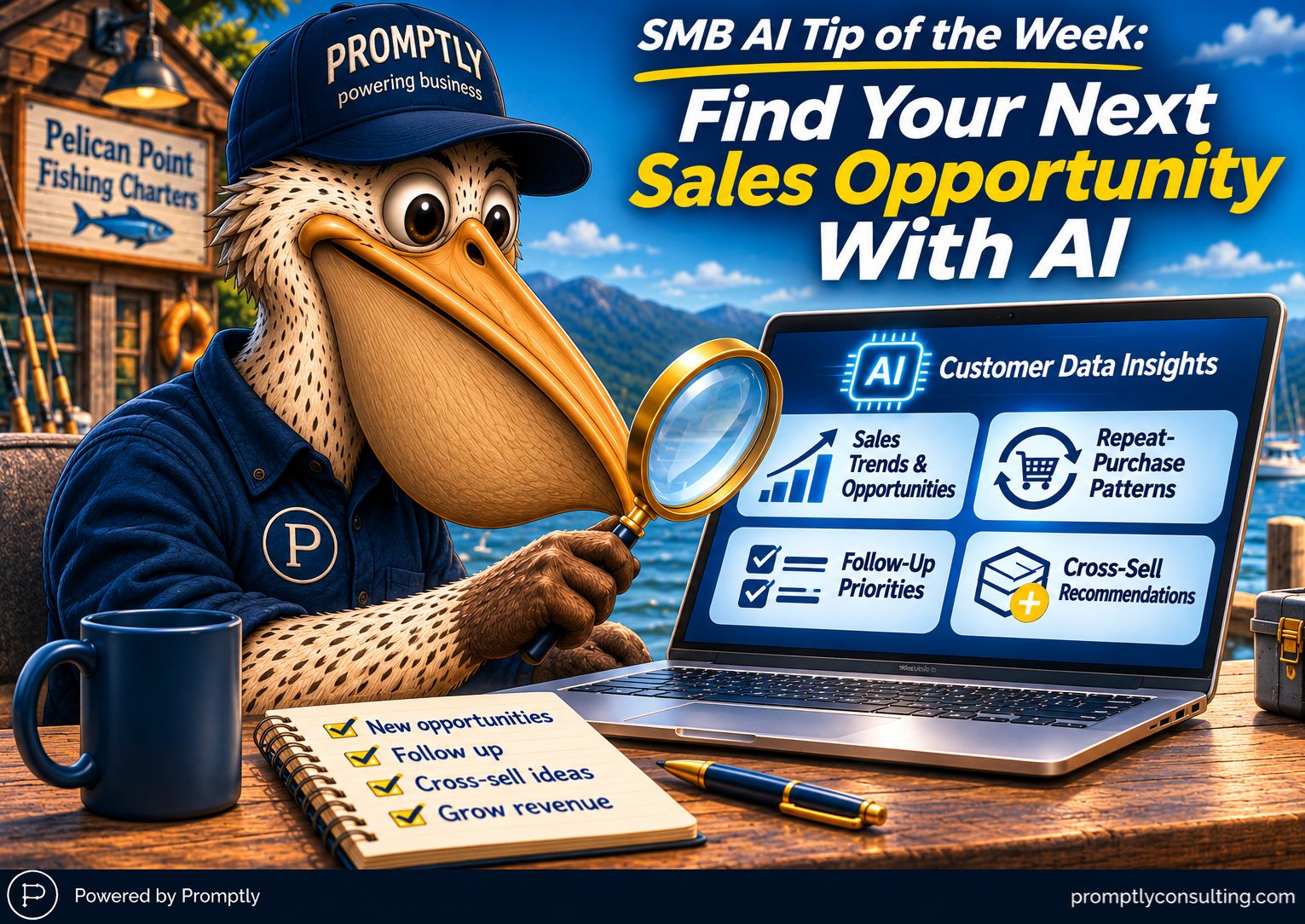
TL;DR: Most small businesses sit on years of customer purchase history and never analyze it, because nobody has a spare afternoon. One prompt starts the work: "Analyze this customer sales report. Identify purchasing trends, inactive customers, repeat buying patterns, and potential upsell opportunities. Recommend five actions I can take to increase revenue." Export your sales report, run it, then verify the findings against your own records before anyone picks up the phone, and strip sensitive customer details first.
Your easiest revenue isn't in a new lead list. It's in customers who bought from you and quietly stopped, or who buy one thing from you and the companion product somewhere else.
What prompt analyzes a customer sales report?
Export your sales history (most POS, accounting, and CRM systems do CSV) and use this:
"Analyze this customer sales report. Identify purchasing trends, inactive customers, repeat buying patterns, and potential upsell opportunities. Recommend five actions I can take to increase revenue."
Then sharpen it with context the data doesn't contain: your normal reorder cycle ("most customers reorder every 6 to 8 weeks, so flag anyone past 12"), your margins (so it doesn't push your cheapest product), and your capacity. Without that, "inactive" is just a guess about a timeframe.
What can AI actually find in your sales data?
Four patterns that are hard to spot by eye in a few thousand rows:
- Customers who've gone quiet. Ranked by what they used to spend, not just how long they've been gone. A lapsed $40k account and a lapsed $400 one aren't the same problem.
- Products bought together. The pairing you never packaged, or the second item half your customers buy elsewhere.
- Upsell and cross-sell openings. Customers using one service who match the profile of those using three.
- A follow-up priority list. Who to call this week, with the reason attached, so the list survives contact with a busy Monday.
How do you protect customer data and avoid acting on a bad number?
Two rules, both non-negotiable.
On privacy: replace names with IDs before you export, and use a business account with training on your inputs turned off. Check your tool's data settings and any client confidentiality terms you've signed. The AI doesn't need to know who the customer is. It needs the purchase pattern, and you can map IDs back yourself.
On accuracy: verify before you act. A mislabeled column, a missing month, or a duplicate customer record becomes a confident, wrong conclusion. Spot-check two or three claims against your records and ask which rows support each finding. If it can't point to them, don't call anyone.
Frequently asked questions
What data do I need to analyze sales patterns with AI?
A simple export with one row per transaction: customer ID, date, product or service, quantity, and amount. Twelve to twenty-four months is enough to see reorder cycles and seasonality.
Is it safe to upload customer data to an AI tool?
It depends on the tool and your obligations. Anonymize identifying fields first, use a business account with training on your inputs turned off, and check any confidentiality terms with your clients. When in doubt, analyze with IDs instead of names.
Can AI be wrong about my sales trends?
Yes. It analyzes only what's in the file and will state a flawed conclusion as confidently as a sound one. Duplicates, missing periods, and inconsistent product names are the usual culprits, so verify findings before acting on them.
Do I need a data analyst or BI software for this?
Not to start. A clean CSV and a capable assistant will surface the obvious opportunities. Tools and analysts earn their keep once you're tracking this continuously rather than answering a one-time question.
How often should I run this analysis?
Monthly or quarterly, depending on your sales cycle. Running it on a schedule is what turns it from a one-time curiosity into a repeatable source of pipeline.
Key takeaway
You probably don't need more leads this quarter. You need to know which existing customers stopped buying, and which are one conversation away from buying more. That answer is already in your sales report. Just verify it before you act on it.
Helping SMBs leverage AI is what we do at Promptly. Reach out or visit promptlyconsulting.com to learn more.